
With the current political turmoil in the U.S., one often dreams about the good old days of the 1960s. While often remembered for its spirit of optimism, burgeoning civic engagement, and generosity – particularly towards international students and scholars who found scholarships, welcoming families, and opportunities to contribute, the 1960s were a defining yet turbulent era for the U.S., marked by both optimism and intense conflict over civil rights. For Asian Americans, the decade was pivotal in shaping modern identity and political consciousness, unfolding against the backdrop of national upheaval.
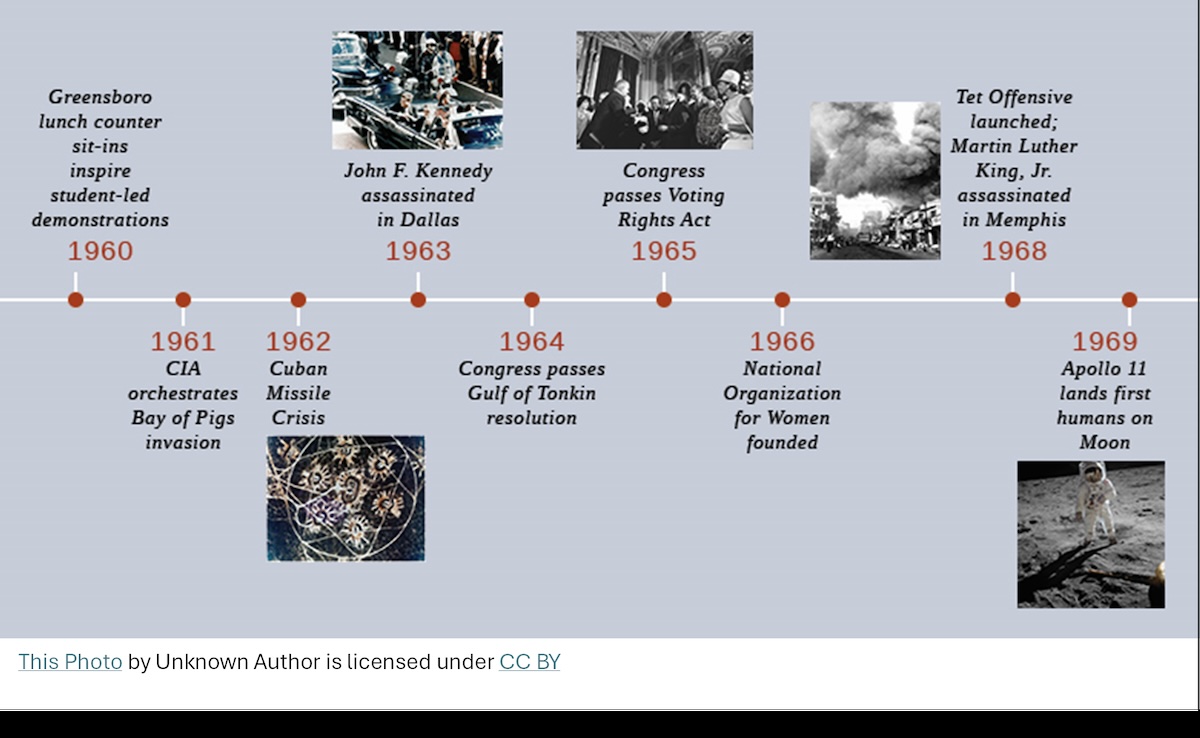
During this era, several key developments involving Asian Americans included:
- Immigration Revolution: The Hart-Celler Act of 1965 dismantled decades of racist exclusionary quotas. This landmark reform opened the door for large-scale immigration from across Asia, fundamentally reshaping the demographic and cultural future of Asian American communities.
- Challenging the “Model Minority” Myth: Asian Americans recognized this label as a divisive tool that masked their own experiences with discrimination and ignored systemic racism impacting other communities of color.
- Birth of the “Asian American” Movement: Inspired by civil rights movements, students and activists forged a powerful new pan-ethnic political identity: “Asian American,” rejecting the term “Oriental.” They organized for ethnic studies, joined farmworker solidarity efforts in Delano, and protested the Vietnam War and urban renewal displacing communities.
For Asian Americans, the decade wasn’t just about benefiting from a welcoming environment; it was about actively fighting for recognition, rights, and self-definition. The movements born in the 60s laid the crucial groundwork for contemporary Asian American activism and continue to resonate in today’s ongoing fights for justice and inclusion. The decade proved that progress required organized struggle, not passive acceptance.