In March, a coalition of leading civil rights organizations gathered for an online briefing to warn about an escalating, multi-front assault on voting rights ahead of the 2026 midterm elections, with Asian American, Latino, Black, and Native American communities facing the most severe consequences.
Moderated by John C. Yang, President and Executive Director of Asian Americans Advancing Justice, the webinar convened experts from five major civil rights organizations to examine voter purges, polling place intimidation, landmark Supreme Court cases, and the erosion of the federal Voting Rights Act.
Yang opened by saying, “At its core, this is about whether all of us as eligible voters, regardless of who they are and regardless of where they live, have a fair and equal opportunity to have their voices heard.” For the Asian American community specifically, the threat is concrete: roughly two in five Asian American voters rely on mail and early voting options now under legal attack, and face language barriers that make polling place assistance an essential lifeline.
Voter Purges and the Attack on the Rolls
Taifa Smith Butler, President of Demos, organized systemic barriers into three categories she called “roles, polls, and trolls.” On voter rolls, she described aggressive and inconsistently applied purges disproportionately harming voters of color, young people, and low-income voters. Georgia conducted one of the largest voter purges in its history last August, removing nearly half a million people due to inactivity. Alabama and Florida have similarly purged voters dangerously close to election cycles.
Butler flagged an emerging federal threat: the government’s efforts to obtain unredacted voter registration files from states to build a national database. “This, I believe, is another effort that we have to watch, that the federal government might try to use the rolls to actually do mass purges,” she warned, while crediting states like California for successfully pushing back in court.
Intimidation at the Polls and the Right to an Assistor
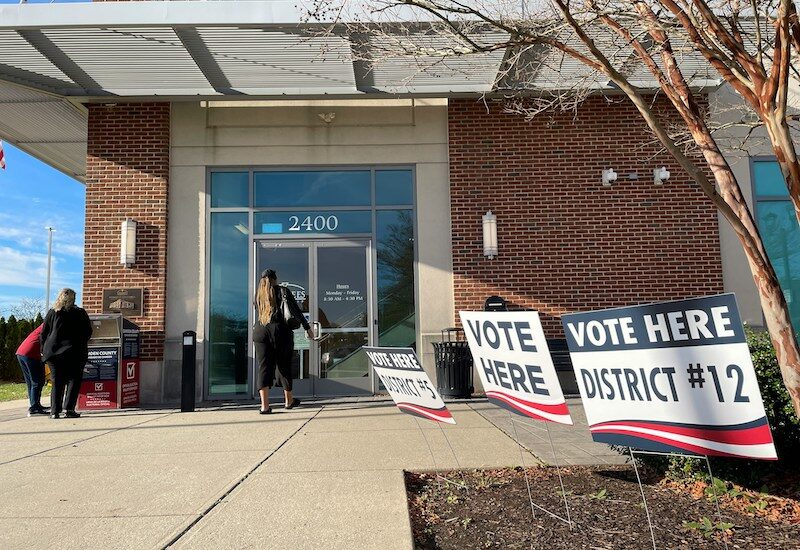
Tom Saenz, President and General Counsel of MALDEF, addressed the threat of voter intimidation, including the possibility of federal agents being deployed near polling places. “We cannot dismiss the possibility that even the federal government through executive order or otherwise may engage in activities including deploying immigration agents or other federal agents at or near polling places,” he said. Private individuals, potentially encouraged by White House rhetoric, could also appear at polling sites in security uniforms or openly carrying firearms.
Saenz also defended Section 208 of the Voting Rights Act, which guarantees every voter not literate in English the right to bring an assistor of their choice to the polls, pushing back on any suggestion that the administration’s executive order making English the official language could override it. “Section 208 of the Voting Rights Act, as duly enacted congressional legislation, cannot be overruled by an executive order of any kind from the president,” he said flatly.
His organization’s own case, Arkansas United, illustrates how thoroughly that right is being dismantled. MALDEF challenged an Arkansas law limiting any single assistor to helping no more than six voters. The Eighth Circuit rejected every legal vehicle available to enforce Section 208. “Every avenue is foreclosed to guarantee and protect the rights granted under the Voting Rights Act,” Saenz said. The case now awaits Supreme Court review.
The Supreme Court and the Future of the VRA
Adriel Cepeda Derieux, Deputy Director of the ACLU’s Voting Rights Project, delivered the briefing’s most urgent news: the Supreme Court may be days away from issuing one of the most consequential voting rights rulings since the civil rights era in Louisiana v. Callais. At the heart of the case is whether remedying racial discrimination under Section 2 of the Voting Rights Act is itself discriminatory.
“If the court rules against voters, it would be a profound setback for multi-racial democracy. It could roll back protections and strip voters of one of their core and meaningful legal defenses for over 60 years,” Cepeda Derieux said. She urged voters not to be deterred regardless of the outcome, noting that electoral maps for November have largely already been set.
On ICE presence at polling places, a fear growing in AAPI and immigrant communities, she drew a firm legal line. “Any deployment of ICE or any law enforcement officers for the purpose of intimidating voters or interfering with the right to vote would be unlawful,” she said, encouraging voters to remain calm and know their rights.
Native Voters and the Threat to Mail Ballots
Jacqueline De León, Senior Staff Attorney at the Native American Rights Fund, described two cases with potentially devastating consequences for Native voters. In Turtle Mountain v. Howe, the Eighth Circuit ruled that private plaintiffs have no right of action under the Voting Rights Act, meaning individuals harmed by racial discrimination could not bring their own cases. “If affirmed, Turtle Mountain would effectively leave the Voting Rights Act an empty shell,” DeLeon said.
A companion case, Watson v. Republican National Committee, threatens the ability to count mail ballots received after Election Day in over a dozen states. For Native voters in remote Alaskan villages, the consequences could be total disenfranchisement. “In some villages, the number of ballots that arrived after election day was over 50%,” DeLeon said. She also dissected the SAVE Act’s nominal inclusion of tribal IDs as a “disingenuous attempt at inclusion when really it’s about exclusion” — tribal IDs lack the place of birth and expiration date the law requires. For remote Native voters, presenting documents in person could require a thousand-mile journey. “Native voters that are disproportionately impoverished, that lack access to roadworthy vehicles, are just certainly not going to be able to make this trip,” she said.
State Voting Rights Acts: Going on Offense
Lordes Rousado, President and General Counsel of Latino Justice PRLDEF, offered the most forward-looking perspective, describing a push to pass state-level voting rights acts as an offensive strategy against federal erosion. Her organization collaborated with the Legal Defense Fund, the Asian American Legal Defense and Education Fund (AALDEF), the Campaign Legal Center, and the Harvard Election Law Clinic to develop model state voting rights legislation released in January.
“The states can, and I would say, must be laboratories for democracy and create rights that go beyond the federal minimums,” Rousado said. The model act includes pre-clearance provisions, protections against vote dilution and wrongful purges, translated materials for language minority voters, and remedies for voters facing intimidation. Rousado pointed to a recent New York victory as proof of concept, where a successful challenge under the state VRA resulted in redrawn maps that restored the voting power of Black, Latino, and Asian voters in Nassau County. Voting rights laws are now on the books in at least eight states, with active legislation in nine others.
The SAVE Act and the Myth of Voter Fraud
The SAVE Act, requiring documentary proof of citizenship to register or vote, drew sustained criticism as a solution in search of a problem. Rousado offered a personal example: her 83-year-old Cuban American mother, a citizen and dedicated voter since the 1960s, currently lacks a valid passport and cannot locate her citizenship papers. “My mother could be disenfranchised by this act when she’s been a citizen and voting since the 1960s,” she said. More than 21 million Americans currently lack ready access to a passport or birth certificate.
Saenz went further, calling the voter fraud narrative driving such legislation a “canard.” “Voter fraud is non-existent in this country and has been for 50 years,” he said, pointing to the first Trump administration’s quietly disbanded voter fraud commission that “could not prove anything.” He reframed the real problem: “The fact is the problem in this country is not over-participation of ineligible folks in voting. It is under-participation of fully eligible voters.”
A Message to Reporters
Closing the briefing, panelists converged on a unified message to journalists on the call: see the full scope of what is happening and name it accurately. Butler urged the media to resist false election security narratives. Cepeda Derieux asked reporters to connect the dots. “This is a broad, very far-reaching, multifront effort to shrink who can participate in our democracy,” she said. DeLeon kept the focus on race. “The shrinking of the electorate is often along racial lines, and I think too often we lose that narrative,” she said. Rousado called for human storytelling: “Uplift the individual stories of people who encounter difficulties in voting. The more those stories are told, the more people will understand that it is a big deal.”
Yang offered a closing summary that distilled the morning’s message: “Restrictions to voting is literally anti-democratic. The purpose of a democracy is to be able to vote, and anytime you are disallowing voting on the basis of imagined problems, that should be called out.”