By SK Lo
On March 28, the Minnesota State Capitol in St. Paul was transformed into a sea of voices, signs, and songs as the latest No Kings rally drew an estimated 150,000 participants to the Capitol Mall and surrounding streets. This third rally, now expanded to include No War and No ICE themes, was part of a nationwide movement that has grown exponentially over the past year, from 2 to 3 million participants in March 2025, to 4 million in October, and now an estimated 8 million across the country. The discontent is swelling, even if the impact on federal policies remains minimal.
My husband and I began our journey at the U.S. Bank Stadium Green Line station in Minneapolis, joined by a friend attending his first rally. The train was already buzzing with anticipation, packed with people carrying homemade signs directed at the president. By the third stop, the train was so full that no additional passengers could board. I felt a pang of sympathy for those left behind, unable to join the collective march toward the Capitol.
When we arrived at the station closest to the Capitol, we stepped into a throng of humanity. Marchers had been converging for hours from multiple directions, and the Mall itself was overflowing, more than 60,000 packed shoulder to shoulder, with tens of thousands more filling the fringes. The sheer scale was breathtaking, a testament to the urgency felt across Minnesota and beyond.
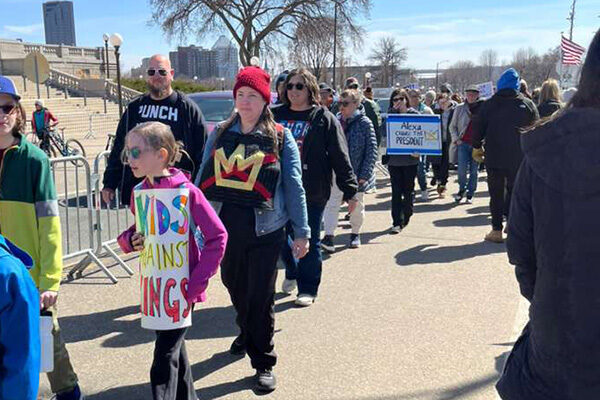
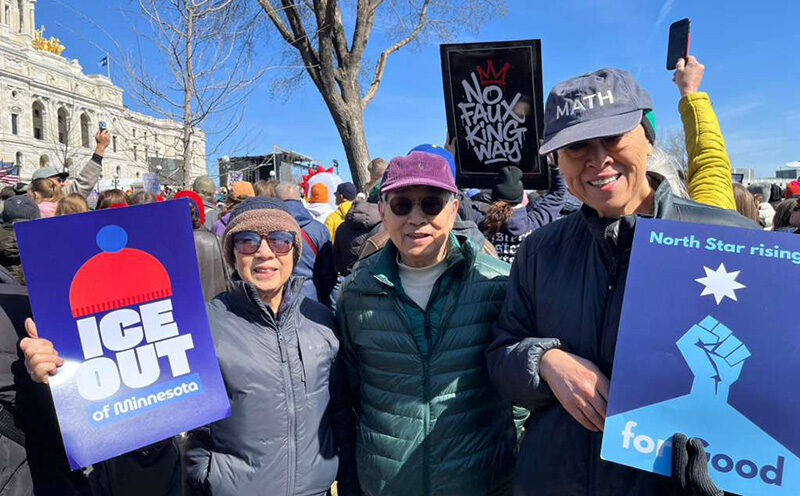
On March 28, 150,000 people protested in St. Paul, MN. Nationwide, more than 8 million people took to the streets, marking one of the largest single-day protests in US history. Photo by SK Lo
As latecomers, we remained at the edges of the gathering. From there, the speeches were difficult to hear clearly, but the presence of national figures was undeniable. Senator Bernie Sanders, Representative Ilhan Omar, and others addressed the crowd, while Bruce Springsteen’s performance added cultural resonance. Even from the margins, the spirit of the rally was unmistakable: peaceful resistance, collective defiance, and a shared determination to stand against authoritarianism, war, and ICE enforcement.
For me, the rally carried profound personal meaning. It was the second No Kings rally I had attended. The first was in October in our suburban neighborhood, but this one felt different. The sheer scale, the unity of purpose, and the energy of the crowd rekindled a pride in being Minnesotan that I had not felt in over fifty years. Standing alongside my husband and our friend, I felt part of something larger, something historic.
We left before the rally concluded, unable to push closer to the center of the Mall. Instead, we found respite in a local restaurant, one of many affected by the surge in activity across the Twin Cities. Conversations there reflected the day’s themes: frustration with federal policies, concern for immigrant communities, and hope that collective action could bring change.
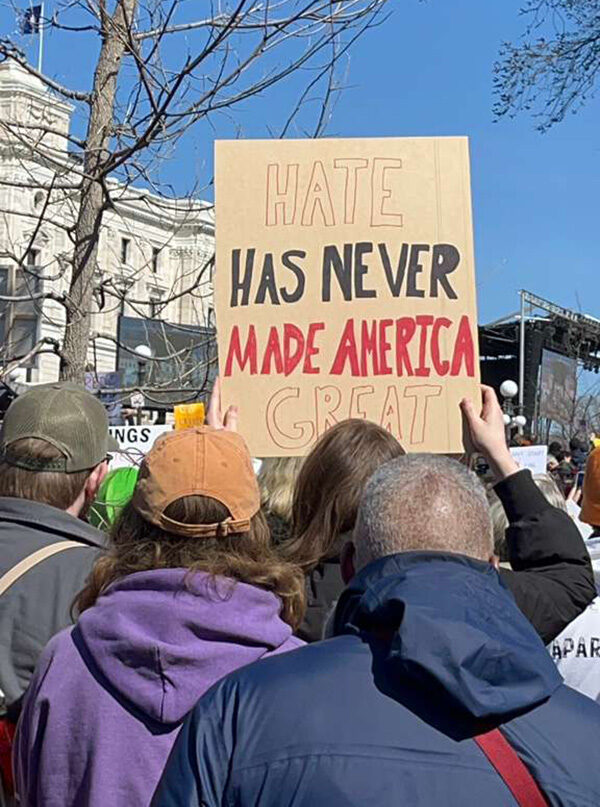
Indivisible Twin Cities was the main organizer in Minnapolis-St. Paul. They will be speaking at the AAUC Unity Summit on June 28, 2026. Visit the Unity Summit event page for more information.
Yet, the rally also revealed a sobering reality. While mainstream populations dominated the crowd, minority ethnic groups were noticeably underrepresented. Many expressed fear of surveillance, worried that cameras capturing their presence could later be used against them. This absence was striking, given that minority communities often bear the brunt of discriminatory federal policies. Their hesitation underscores the challenges of building truly inclusive movements in an era of heightened scrutiny.
The No Kings, No War, No ICE rally was more than a protest; it was a declaration of values. It reminded us that democracy thrives when ordinary people take to the streets, raise their voices, and demand accountability. For Minnesota, it was a moment of unity and defiance, a reaffirmation that civic pride and resistance can coexist. And for me personally, it was a day that rekindled pride in my state, my community, and the power of collective action.