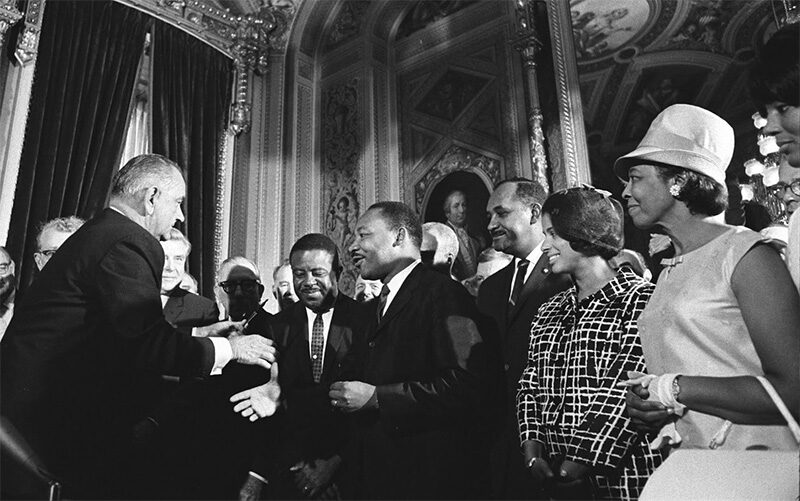
Sixty years ago, on August 6, 1965, President Lyndon B. Johnson signed the Voting Rights Act (VRA) into law, forever changing the landscape of American democracy. This monumental achievement was the culmination of decades of tireless struggle and sacrifice by civil rights activists, who marched and organized to dismantle the systemic racial barriers that had denied Black Americans and other communities of color the right to vote. Before the VRA, states, particularly in the South, used a myriad of tactics to disenfranchise Black citizens, including poll taxes, literacy tests designed to be impossible to pass, and outright intimidation and violence. The VRA served as a powerful federal tool to combat this injustice, outlawing these discriminatory practices and, most critically, establishing federal oversight in jurisdictions with a documented history of voting discrimination.
For decades, the VRA worked as intended, becoming a cornerstone of American democracy and ushering in an era of increased political participation and representation. It empowered millions of citizens who had been unjustly excluded, paving the way for a more inclusive and representative government. However, as the VRA enters its 60th year, its protections are facing some of the most serious threats in its history. A series of deeply impactful Supreme Court decisions has systematically weakened the law’s most effective provisions.
The first major blow came in 2013 with the Supreme Court’s ruling in Shelby County v. Holder. This decision effectively eliminated the VRA’s preclearance provision (Section 5), which had required states and localities with a history of discrimination to get federal approval before changing their voting laws. Almost immediately, states that were no longer subject to this oversight began passing restrictive measures. Within hours of the ruling, Texas announced a strict voter ID law, and North Carolina followed by eliminating same-day registration and cutting early voting periods. These laws, and others like them, were designed to create new barriers to the ballot box, a move that disproportionately impacts minority voters.
A second blow was delivered in the 2021 decision Brnovich v. Democratic National Committee, which made it significantly harder for plaintiffs to prove racial discrimination under Section 2 of the VRA. This ruling raised the legal bar for challenging discriminatory laws, a change that further emboldens states to enact new restrictions. More recently, a 2025 ruling from the Eighth Circuit Court of Appeals has cast doubt on whether private citizens and organizations can even bring lawsuits under Section 2 at all—a foundational right that has been crucial for decades. If this ruling is upheld by the Supreme Court, it would leave the enforcement of a key provision solely in the hands of the Department of Justice, a move that would upend decades of legal precedent and silence countless voices.
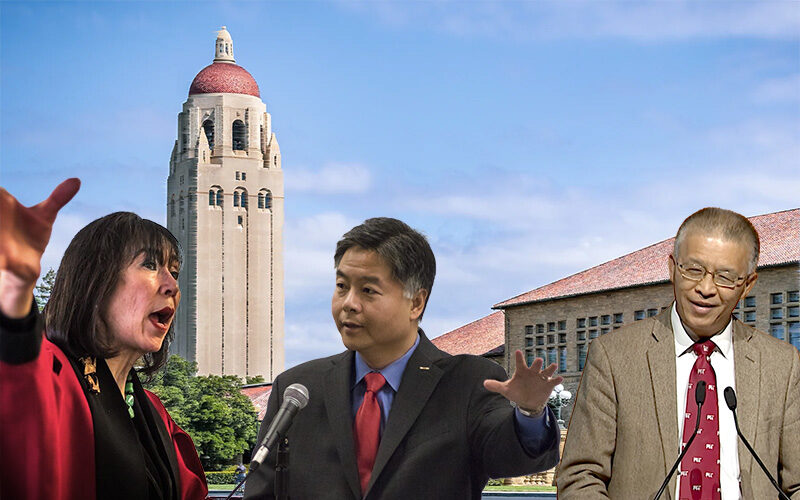
The recent redistricting measure in Texas is the latest example of a legal trend that is eroding the political power of minorities. It created five more congressional seats favoring Republicans. State Representative Gene Wu (who is scheduled to speak at AAUC’s Unity Summit) led other Democrats in a walk out to delay voting. A vote was ultimately taken and the Republican majority prevailed.
These legal changes have had a direct and often devastating impact on Black, Hispanic, and Asian American communities. For Black voters, who have relied on the VRA to challenge voter suppression and gerrymandering, the erosion of Section 2 would make it nearly impossible to seek justice in federal court. Similarly, Hispanic and Asian American voters are uniquely affected by measures like the elimination of bilingual ballots and language assistance services in some areas. Reductions in early voting and the consolidation of polling places in urban areas, where many of these communities reside, can create long lines and confusion, particularly for those with limited transportation or inflexible work schedules. Additionally, Native American voters face unique challenges, including a lack of on-reservation polling sites and difficulty obtaining the specific forms of identification required by new voter ID laws. Despite these significant challenges, the fight to protect the VRA continues.
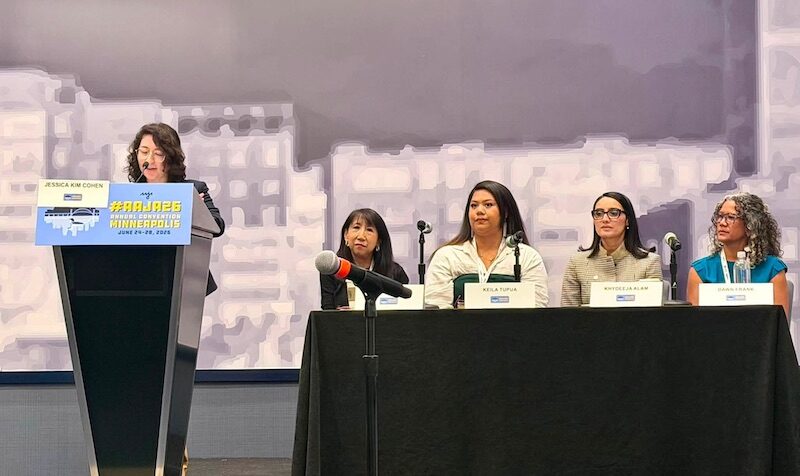
Grassroots organizations and civil rights groups are on the front lines, fighting these battles in court and advocating for new legislation. Among those serving the AANHPI community are APAPA, SEARAC, NCAPA, APIAVote, Indian American Impact, and AAPI Data.
Individuals can play a crucial role as well. Getting involved with these organizations is a great way to stay informed and help with voter registration drives. You can volunteer to be a poll worker to ensure a smooth voting process, help with ride-sharing to polling places, and fact-check election information on social media. Contacting elected officials to express support for federal voting rights legislation, such as the John Lewis Voting Rights Advancement Act, is also vital. The VRA’s 60th anniversary reminds us that the right to vote is not a static guarantee, it is a living, breathing promise that requires constant vigilance and collective action to defend.
Recommended Reading by AAUC
Civil Rights Attorneys Warn of Ongoing Threats to Voting Rights on 60th Anniversary of VRA, Asian Americans Advancing Justice (AAJC), July 25,
Voting Rights Act’s 60th Anniversary Comes Amid Uncertainty, Axios, August 2, 2025
Voting Rights Primer, APIAVote
Understanding Voter Suppression in Today’s Election Process, Learning for Justice