By SK Lo, Founding President and Board Chair of AAUC
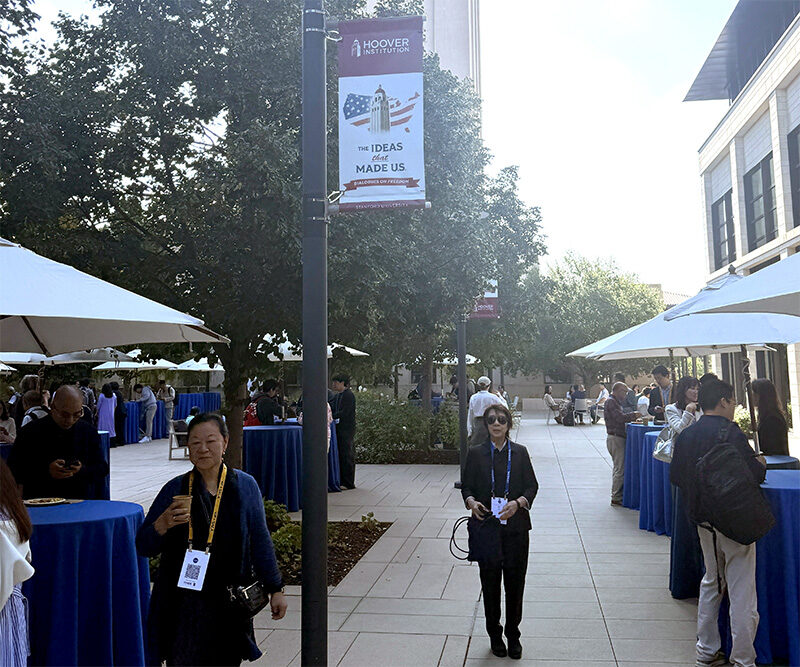
On August 9, I attended the policy forum of the AASF Frontiers & Pioneer Symposium at Stanford University, a convening of national leaders, scholars, and policymakers grappling with some of the most urgent questions facing America today. From civil liberties to federal research funding to the complex dynamics of U.S.–China competition, the forum offered a rare, unfiltered look at the challenges shaping the nation’s scientific and civic future.
Civil Liberties Under Pressure
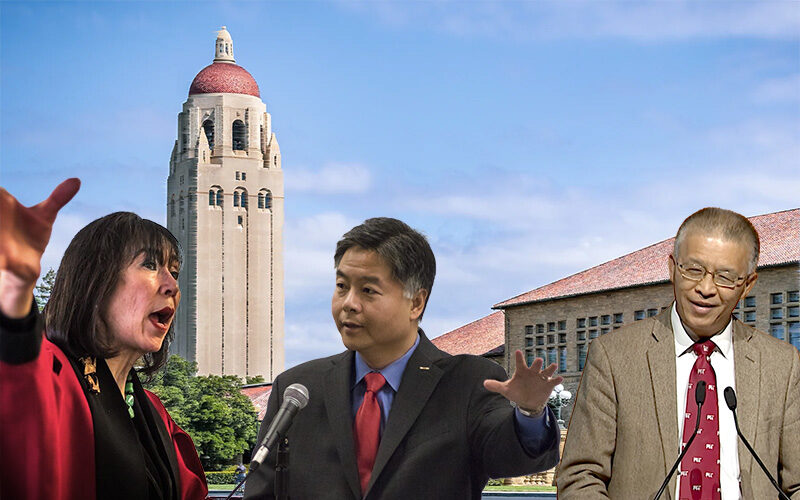
The program opened with Dr. Karen Korematsu, daughter of Fred Korematsu, whose landmark Supreme Court case helped secure birthright citizenship and civil liberties for generations of Asian Americans. She spoke passionately about the dangers of complacency at a time when civil liberties are increasingly strained. Her message echoed concerns long championed by the Asian American Unity Coalition (AAUC): rights must be defended proactively, not reactively.
Federal Funding and the Future of Research
Former Federal OMB Deputy Director Nani A. Coloretti provided an insider’s view of how federal dollars flow and why the current instability in Congress threatens long-term research planning. She underscored the need for a durable power structure capable of sustaining America’s scientific enterprise, from basic research to bold venture initiatives.
A subsequent panel featuring faculty from UC San Francisco, Princeton, MIT, and the University of Maryland reinforced this point: America’s research universities cannot thrive without predictable funding, strong public-private partnerships, and immigration policies that continue attracting global talent.
Civil Rights, Immigrants, and America’s Promise
Former Congressman Mike Honda reminded attendees that constitutional rights apply to everyone on U.S. soil, regardless of immigration status. He emphasized that immigrants’ willingness to sacrifice, driven by love of family and hope for opportunity, has been central to America’s success. His call to “practice politics” by speaking up, asking hard questions, and holding government accountable resonated strongly.
U.S.–China Competition and the Fate of Scientists
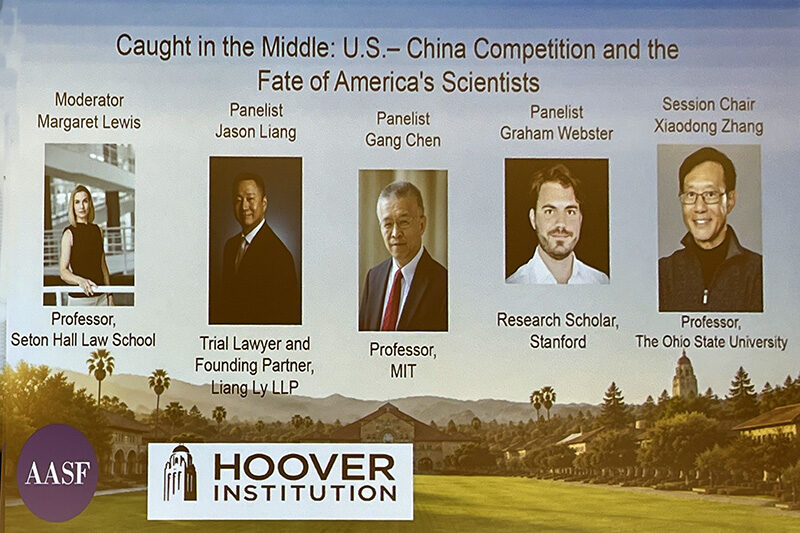
The most anticipated session, Caught in the Middle: U.S.–China Competition and the Fate of America’s Scientists, drew a standing-room-only crowd in the 300-seat Hauck Auditorium. Moderated by Seton Hall law professor Margaret Lewis, the panel featured MIT professor Gang Chen, trial lawyer Jason Liang, and Stanford researcher Graham Webster.
Their message was sobering: many Chinese-heritage scientists continue to face harassment, unclear guidelines, and investigations under revived “foreign agent” frameworks. Homeland Security’s expanding authority, coupled with laws that lag behind technological realities, has created an environment of fear and confusion. Researchers often do not know what is permitted, what is prohibited, or how to safely collaborate internationally.
Congressional Oversight and National Talent
Congressman Ted Lieu warned that congressional oversight has eroded, with major laws increasingly passed as add-ons to unrelated bills. NSF Director Sethuraman Panchanathan added that the U.S. has not fully tapped its domestic talent pool and has substituted this gap by relying heavily on international students. He argued that public service is not sufficiently emphasized in American education, leaving a civic vacuum at a time when national challenges require collective responsibility.
Innovation and the Immigrant Contribution
In his closing keynote, former San Jose Mayor Sam Liccardo noted that the Bay Area’s extraordinary innovation may be tied to its demographics: over 40% of residents are foreign-born. Diversity, he suggested, is not merely a social asset, it is an engine of creativity and economic vitality.
A Call to Action
My key takeaway from the symposium is clear: trust in institutions is eroding, isolated organizations are vulnerable, and collaboration is essential. America must strengthen research funding, protect civil liberties, welcome international students, and cultivate a culture of public service. Individuals, too, must lend their voices and resources to support the organizations working on these issues.
The symposium was a reminder that America’s promise is not self-sustaining. It requires participation, vigilance, and the courage to ask “why” and “how come” and to search relentlessly for the truth.