Bobbie Singh-Allen, the Mayor of Elk Grove, CA, is proud to be the first directly elected Sikh woman mayor in the United States. She is also bothered by it. “The Sikh community has been in California 125 years,” the Elk Grove mayor said. “Why am I the first?”
Her question captures a gap that runs through American politics. Asian Americans are about 7 percent of the U.S. population but roughly 1 percent of elected officials. In California, where about 16 percent of residents are Asian American, they hold fewer than 3 percent of the state’s roughly 20,000 elected offices. That is despite Asian Americans being the fastest-growing group of eligible voters in the country, according to Pew Research Center.
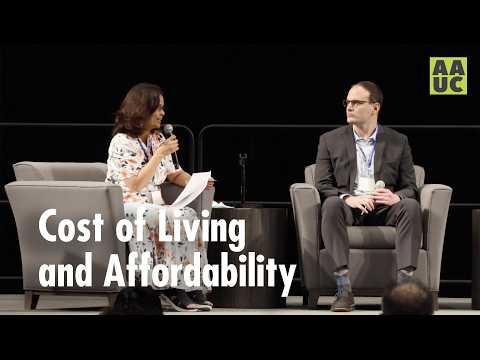
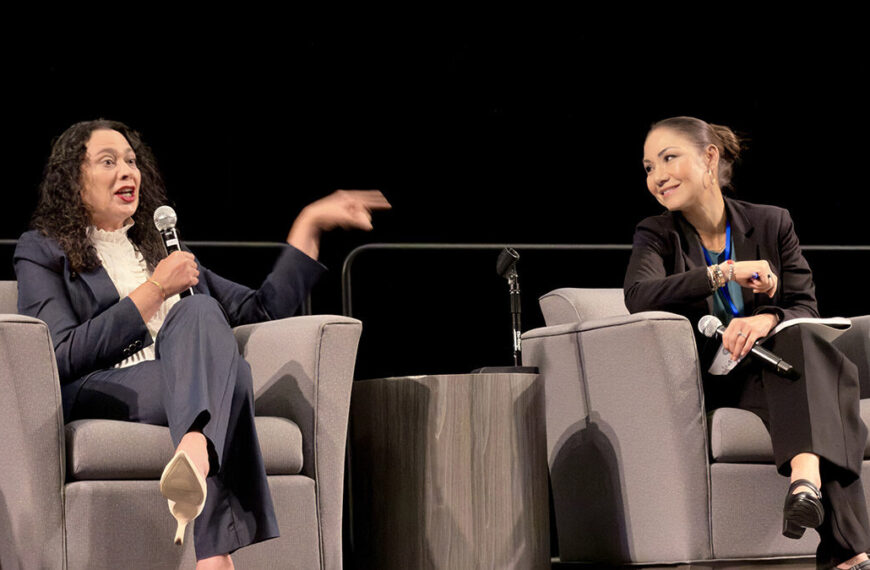
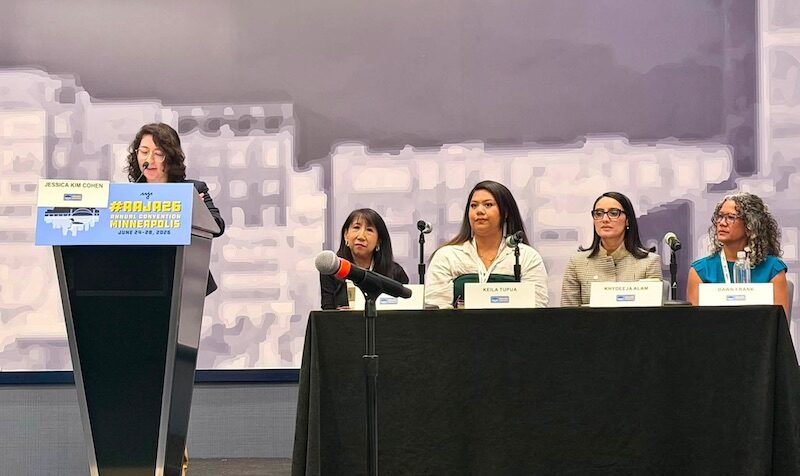
Singh-Allen joined West Sacramento Councilmember Quirina Orozco and Jenny Farrell, Executive Director of the League of Women Voters of California, at the AAUC Unity Summit on October 7 in Sacramento to talk about closing that gap. CalMatters politics reporter Maya Miller moderated, with two questions: how to get more AAPI candidates to run, and how to reach the voters who could elect them.
Why Representation Matters
Seeing is believing, Farrell said. People are more likely to run for office when someone with a similar background and lived experience has already done it. Her own mother was a lawyer, so becoming one never felt out of reach. “If we see that example is possible, then we’re more likely to consider it for ourselves,” she said.
Representation can also lift turnout. An Asian American candidate on the ballot makes higher Asian American turnout more likely, Farrell said, though she cautioned that it is one factor among many. Campaign outreach, a district’s makeup, the issues at stake and whether information is available in voters’ languages all matter too. And the AAPI community, she stressed, is not a monolith.
For Singh-Allen, who immigrated at age 4, the stakes are personal. When she visits schools, young Indian American girls tell her they didn’t know a career in politics was possible for them, in a culture that steers children toward medicine, engineering and law. “I don’t want to be the last or the only,” she said. Representation, she added, “isn’t just tokenism.”
Orozco’s story shows what lived experience brings to the dais. The granddaughter of a Filipino immigrant who arrived during the Depression, she was born to a 16-year-old mother. As a child she was woken in the night and told to grab her things because they were being evicted, then taken to a motel on West Sacramento’s West Capitol Avenue. In 2024, after redistricting, she became the first representative of the district that includes that corridor. “I have a unique humanitarian perspective because I have seen those places from the inside,” she said.
She saw the same dynamic during 21 years as a prosecutor handling sexual assault and child abuse cases. Some young victims agreed to testify, she said, because she looked like “an auntie” to them.
Why More Don’t Run
The path to office has real obstacles, and the panelists named them plainly.
Money. When Rep. Ami Bera urged Singh-Allen to run for mayor in 2020, the filing deadline was a week away. She had $10,000 in her school board account; the incumbent had $250,000. “My worst enemy was me,” she said. Bera told her to declare and the money would come. Her Indian American community became her largest early donors, and she raised $300,000 within a month. Women, she noted, often find that money doesn’t come as easily.
Someone to ask. Neither official planned a political career. Singh-Allen got her start as a Sacramento State student working for her professor, the late Sacramento Mayor Joe Serna Jr. Orozco was a prosecutor and cycling instructor when a student in her class, Christopher Cabaldon, now a state senator, asked why she wasn’t running for city council. Her answer: “Heck no.” She entered the race months before the election anyway, and won.
The spotlight. Public life is hard, especially for women. Soon after her first win, Orozco skipped a Black Friday trip to Target for fear constituents would see her in a messy bun and gym pants instead of the polished image on her flyers. Her mentor told her that by showing the city what a working mother of four on the council really looks like, she would normalize it for others. Singh-Allen described a stretch of anxiety, panic attacks and sleepless nights before she learned to protect time for herself and her family.
Self-doubt. “You’re never going to feel ready,” Orozco said. Three campaigns in, the imposter syndrome remains. Her fix: stop focusing on yourself and focus on what needs to be done.
Reaching the voters who elect them
Candidates also need voters who feel seen. Farrell said the major parties reach out to AAPI voters less than to other groups. A recent survey of California’s Asian American voters by AAPI Data and partners found that about half hadn’t been contacted by the Democratic Party and 59 percent hadn’t heard from Republicans.
Lower turnout, Farrell argued, isn’t apathy. A third of young people volunteered with a community organization in the past year, more than any other age group. The task is turning that care into civic engagement, and trusted messengers matter most. “I’m not the one who should go be speaking to a Vietnamese community,” she said.
What Community Leaders Can Do
Tap a shoulder. Both officials ran because someone asked. Orozco later did the same, recruiting two women whose 2022 wins made West Sacramento’s council the city’s first all-women council, all of them women of color. “If it’s not you, find someone,” she urged.
Build the pipeline through service. Singh-Allen served eight and a half years on her school board before running for mayor, and said candidates should first be rooted in their communities, including through nonprofits and civic groups. Orozco suggested starting small: a parks or planning commission, or speaking at public comment. “You don’t have to go from zero to school board.”
Put people to work on campaigns. Walking precincts, organizing lists, registering voters and interpreting are the easiest on-ramps. “You can be invisible and still help,” Orozco said.
Be the early money. Community donors carried Singh-Allen’s first mayoral run. That support, she said, is “the backbone that people like me needed.”
Turn clients into voters. Farrell urged specific plans, not slogans: Did you get your ballot? Will you mail it or use a drop box? Pull up Vote411.org together. Stock waiting rooms year-round with the League’s Easy Voter Guides, available in English, Chinese, Korean and Vietnamese.
Pair passion with patience. Young leaders want change fast, Singh-Allen said, but passion needs purpose, and real change takes time.
Orozco, who told the audience she is living with advanced-stage cancer, said she still shows up every day because “there are people whose voices need to be heard.” She hoped listeners would go home and say, “I’m the one, I’m ready.”