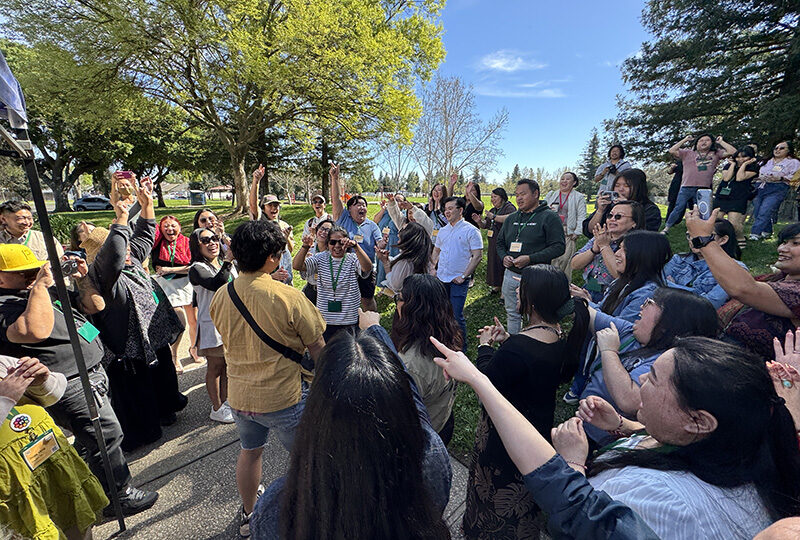
The wars in Southeast Asia ended 50 years ago. The people who survived them and their descendants gathered to envision what the future holds.
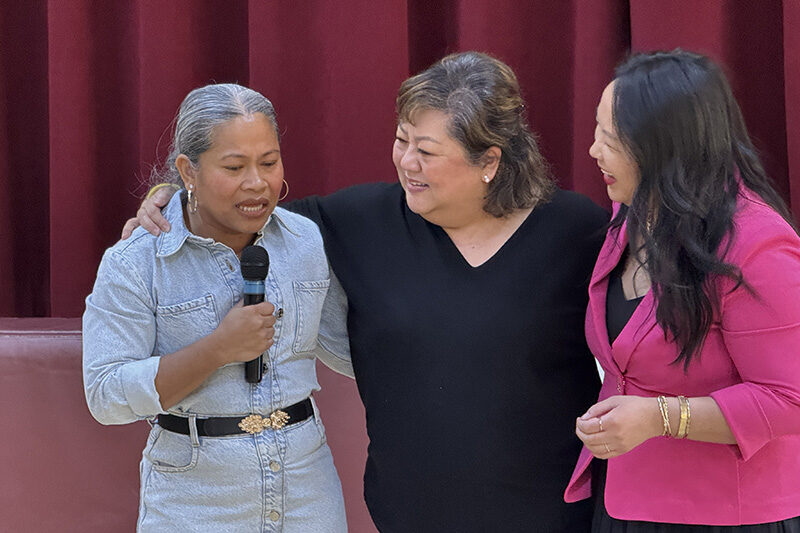
SEAFN UNITI Fest was a three-day retreat held March 10–12, 2026, at the Jose Rizal Community Center in Sacramento. More than 100 community leaders, organizers, artists, and advocates attended from across the United States, representing Cambodian, Hmong, Laotian, and Vietnamese communities. Many came from small, grassroots organizations that had never before been in the same room together. They were welcome by Co-Executive Directors of SEAFN, Chhaya Chhoum and Pheng Thao.
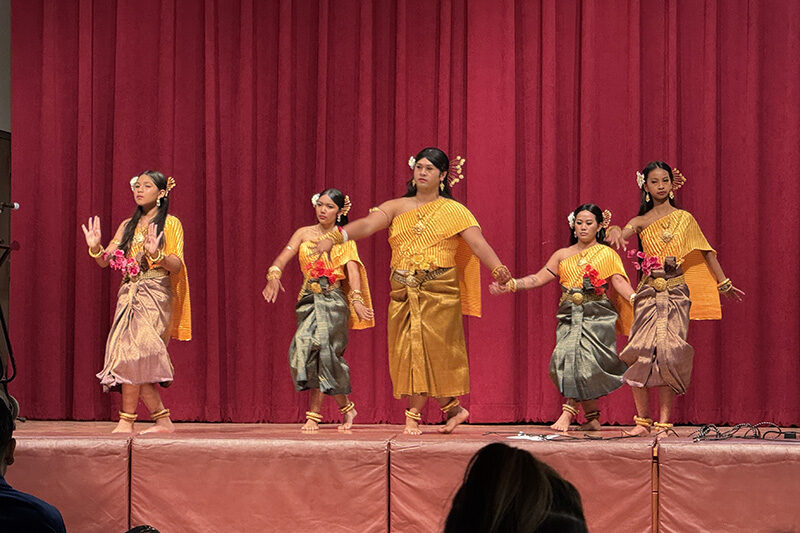
UNITI stands for “Unite, Nourish, Inspire, Transform, and Ignite.” The event was organized by SEAFN, the Southeast Asian Freedom Network. The agenda covered many topics including movement strategy, gender justice, and creating “healing space” for people grappling with their family’s journey to American and now doing frontline community work. An outdoor screening of “Taking Root,” a documentary series about Southeast Asian refugee communities rebuilding in America, capped one of the evenings.
The timing of UNITI Fest marked the 50th year anniversary of the end of the Wars in Southeast Asia. The fall of Saigon, the end of the Khmer Rouge’s rise to power, and the conclusion of the Secret War in Laos are conflicts that displaced millions and sent waves of refugees to the United States. SEAFN framed the anniversary as a strategic inflection point for the attendees.
Who Came and Why Sacramento
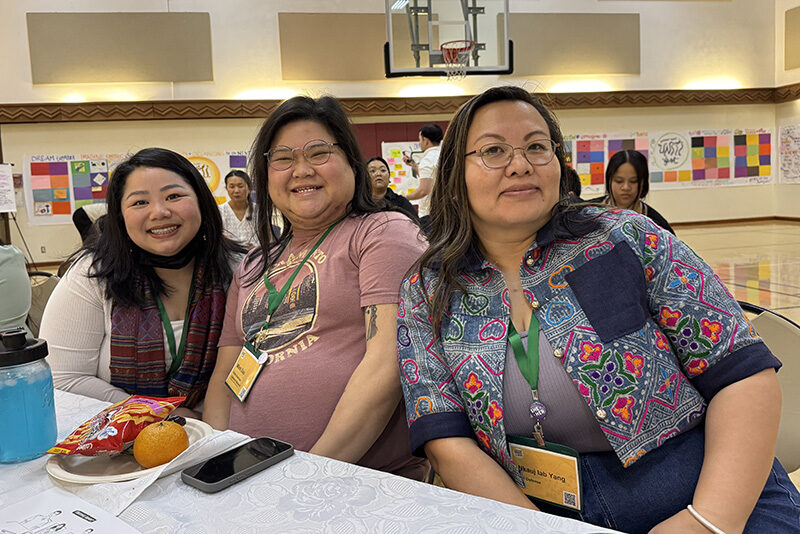
Attendees traveled from Maine, Florida, Texas, Wisconsin, Minnesota, and California. Most represented organizations less than five years old.
Chhaya Chhoum said the Sacramento location was chosen in part because of what she and a colleague heard while touring the Central Valley ahead of the event. “When we were having conversations with folks in the Central Valley, particularly in Sacramento, Southeast Asian organizations who were saying, ‘This is the first time we’re in a room with each other,'” Chhoum said. “So, for us, it was an opening, an opportunity, an invitation to come to Sacramento.”
Chhoum said the goal of the gathering was not to respond to immediate crises like deportation fights, immigration enforcement, daily political pressures, but to step back from them.” All of our folks are urgently surviving, making decisions around who do we fight for around deportation, detention, all that stuff,” she said. “We really want to curate a space that allowed for people to dream and imagine what the next 50 years and beyond look like to Southeast Asian people in this country.”
Inside the Sessions
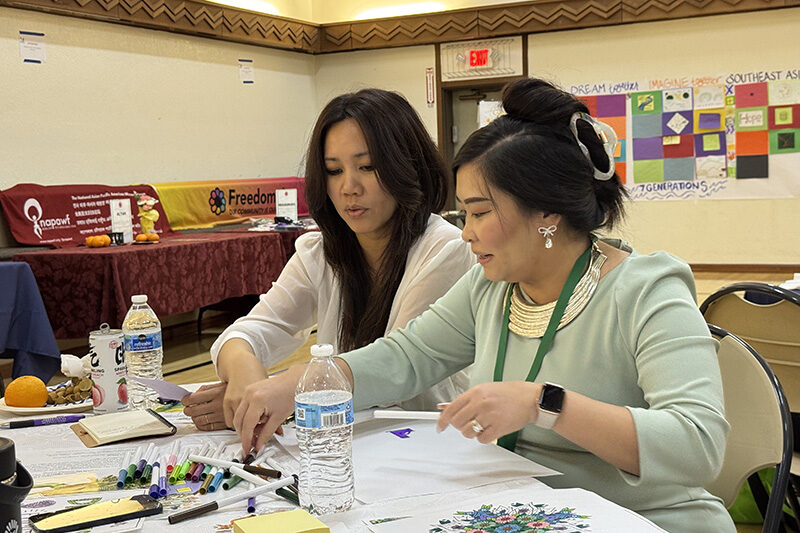
The program was built around sessions that moved from reflection to action The opening session, “Many Struggles, One Fight,” brought together speakers to discuss what connects communities whose histories (Cambodian genocide, the Vietnam War, the Laotian Secret War) are distinct but intertwined. Another session, “From Silos to Systems,” had attendees map their organizational ecosystems by region and affinity group, identifying gaps, overlaps, and potential collaborators.
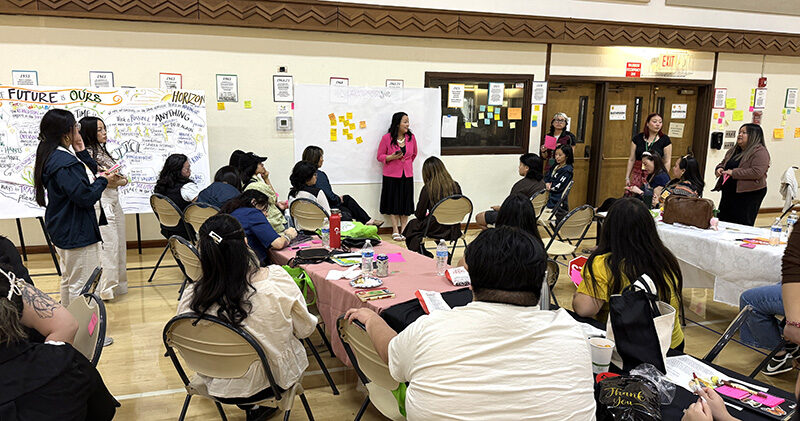
The most discussed session was “The Horizon,” facilitated by Emil Sao of Collective Acceleration, a learning community focused on long-term systems change. Sao asked participants to envision what Southeast Asian communities would look like not in five or ten years, but seven generations, or roughly 150 years, into the future.
The exercise, he acknowledged, runs counter to how most advocacy organizations operate. “We’re so focused on reactivity and triage and thinking about what we need right now,” Sao said. “Actually, the best way to move towards a thriving world is to envision and strategize much further beyond.”
He pushed participants toward specificity, away from policy abstractions. Instead of “food sovereignty,” he asked: what does it mean to farm the exact seeds you want, in the garden you want? The framing came from indigenous traditions, he noted. Seven generations is a timeframe used by many indigenous cultures worldwide as a planning horizon.
Another session was “The Future Is Ours,” used a rotating chair format to let attendees share what they were taking away and what actions they intended to take.
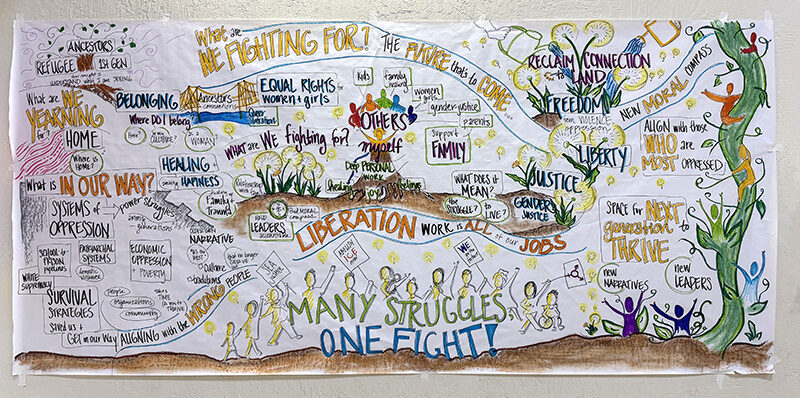
What Young People Said They Were Fighting For
A notable feature of the gathering was the number of young attendees, people in their 20s and early 30s who are a generation or more removed from the refugee experience but still navigating its consequences. Chhoum said a clear theme emerged when she asked young participants what they were fighting for.
“They’re fighting for belonging,” she said. “And they’re fighting for the accountability of the harm that was caused to their parents and their grandparents. Part of belonging is also understanding how you got here, how your people got here, how your family survived.”
TK Le, SEAFN’s Communications Coordinator, said the question of whether young Southeast Asians are focused on their own present-day struggles or their parents’ and grandparents’ histories may be a false choice. “We’re always all looking to the past, the present, and the future all at the same time,” Le said. “The past never goes away — the genocides, the wars, the immigration. We carry all that with us.”
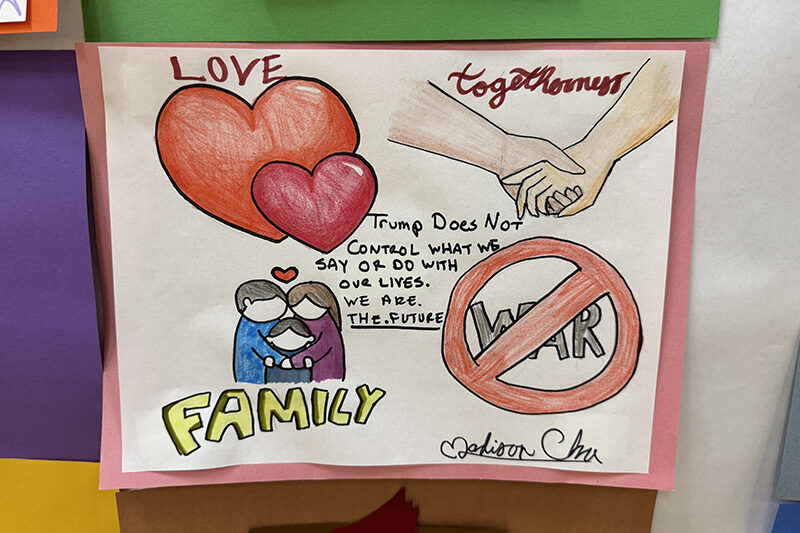
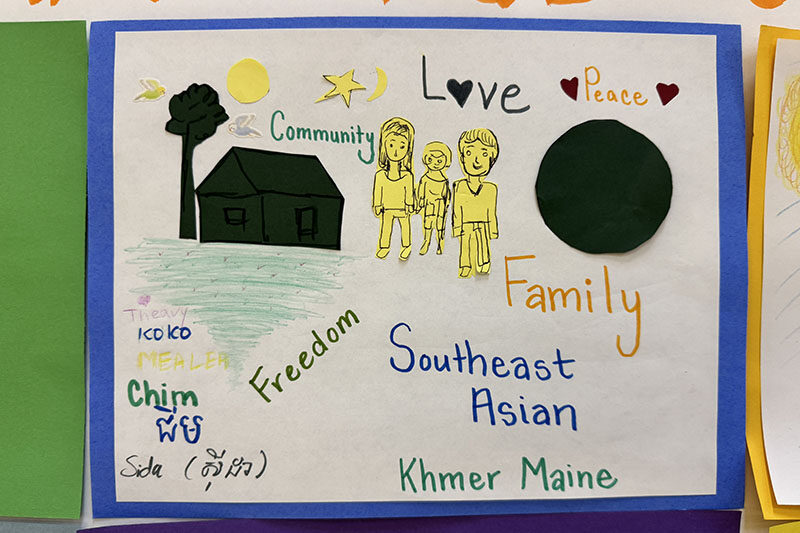
Le pointed to a hand-lettered piece on the event’s community quilt wall, a collaborative art installation where attendees contributed writing and images throughout the weekend. The text read: “We struggle from different forms of colonial violence imposed by the same colonial capitalist hands. The system cannot protect you from violence. We protect us.”
“Our oppressions are related,” Le said. “We have to remind ourselves that our liberations are also connected.”
What Attendees Envisioned
The written reflections produced during the Horizon session formed a sprawling, unfiltered record of what participants said they were working toward. Taken together, they described a world without borders, a criminal justice system replaced by community-based accountability, free and universal healthcare, multilingual education, rights for ecosystems, queer Southeast Asian people living openly and safely, and an end to billionaire wealth accumulation.
The writing was sometimes lyrical, sometimes blunt. One participant described the work ahead this way: “I see horizon work as us, in a boat, on the shore of collapse, making the decision that we have a direction of where we want to go. We have some, not all, of the supplies. But despite that uncertainty, we move towards the horizon.”
Another wrote: “There are people not yet born, or even a concept yet, who will experience turmoil, strife, struggle that may not even exist in this world yet, who I am dedicating my life, my time on Earth to.”
What Organizers Said They Wanted Attendees to Take Home
SEAFN’s stated goals for the gathering included building a shared policy and advocacy platform across racial, gender, and economic justice lines, and strengthening collaboration among Southeast Asian organizations that have historically operated independently of one another.
Chhoum was direct about her expectations for what happens after people leave Sacramento. “We hope they continue to do community work,” she said. “Doesn’t have to be through a nonprofit. They can become farmers, healers, business people, social media influencers. But that they do it all towards this horizon that we create collectively together, that wherever they are, they do all of their work towards that horizon.”


Ted:
Your descriptions of the three day event is good and I enjoyed reading it and felt the anguish of the participants as well as their hopes for a better future.
AngelaAnand