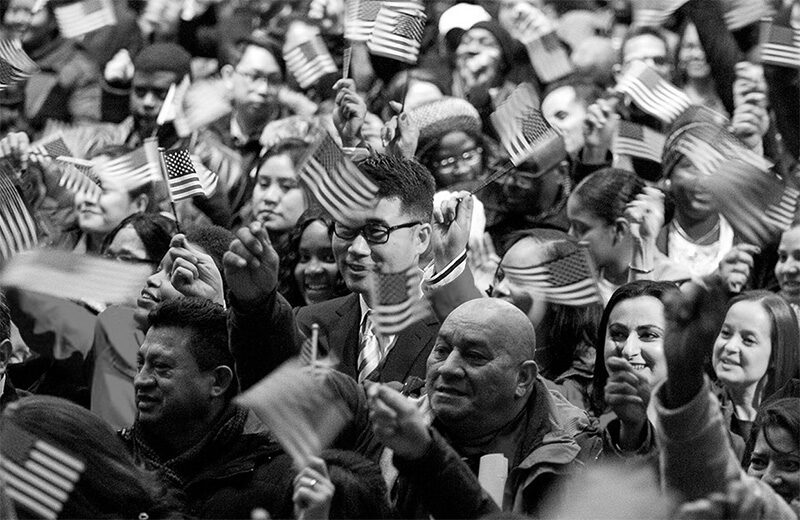
I came to this country fresh out of college, newly married and full of hope. After a few years of residency, my spouse helped guide me through the process of becoming a naturalized citizen. At the time, I didn’t fully understand the immense challenges many people face in securing citizenship or permanent legal residency in the United States.
It wasn’t until later, through both personal interest and advocacy work, that I began to uncover the complex and often painful history of immigration in this country. During the upcoming 2025 Unity Summit hosted by the Asian American Unity Coalition (AAUC), leaders and experts will delve into the ongoing debates and developments in U.S. immigration policy. We will also be honoring a trailblazer with the Dalip Singh Saund Award, recognizing their significant impact on society. It is worth remembering that Congressman Dalip Singh Saund himself fought against race-based exclusion acts that discriminated against immigrants decades ago.
Immigration policy in the United States has always reflected national priorities. For those who are granted citizenship, it confers rights enshrined in the Constitution—such as the right to vote, to work, and to own property. In exploring the roots of America’s immigration laws, I studied the Chinese Exclusion Act and the Luce-Celler Act. Both are stark reminders of how deeply racial discrimination once shaped immigration policy. These laws specifically targeted immigrants from China, India, and the Philippines in the early to mid-20th century. Many of these early immigrants came in search of work, finding labor-intensive jobs in railroad construction or farming across the American West.
Over the years, the definition of who can become a U.S. citizen—and why—has evolved. Immigration legislation has continually been reviewed and revised to meet the changing needs of a country long described as a “nation of immigrants.” Modern immigration categories emphasize family reunification and employment-based migration.
The 1965 Hart-Celler Immigration Act marked a pivotal shift by establishing a preference system that eased the path for professionals such as nurses, physicians, and academics, as well as refugees from Asia, Latin America, and the Caribbean. This act helped bring U.S. immigration policy more in line with the ideals set forth in the Declaration of Independence.
Today, however, new challenges have emerged. An increasing number of unauthorized migrants are arriving from neighboring countries, prompting debates over national security, economic strain, unemployment, and the future of American labor markets. The national discourse around immigration is further complicated by rising concerns over crime and budget deficits, all of which intersect with broader economic and geopolitical issues.
One of the most significant recent developments is the introduction of the Dignity Act of 2025, a bipartisan immigration reform bill co-sponsored by Representatives Maria Elvira Salazar (R-FL) and Veronica Escobar (D-TX). The legislation proposes comprehensive solutions: strengthening border security, ending the practice of “catch and release,” reforming the asylum process, and mandating E-Verify for employers. It also outlines a “Dignity Program,” offering a seven-year pathway to legal work status and permanent residency (though not citizenship) for long-term undocumented immigrants. Additionally, the bill seeks to align legal immigration systems with workforce needs and includes robust workforce development initiatives.
Meanwhile, U.S. Citizenship and Immigration Services (USCIS) has resumed neighborhood checks for naturalization applicants and is now factoring in anti-American sentiments during benefit evaluations. These changes are driven by bipartisan support and reflect a broader push to reform the immigration system from both sides of the aisle.
Attendees at the 2025 Unity Summit, to be held September 16–17 in Washington, D.C., will receive up-to-date briefings on these crucial developments. This annual event promises to offer vital insights into the evolving landscape of U.S. immigration and a platform to reflect on the values that continue to shape our nation’s future.